
YOUNG MEMBER COMMITTEE
Foster exchange and collaboration among Young Researchers in the Bio-based materials in pavement community.
AIM

ABOUT
YMC
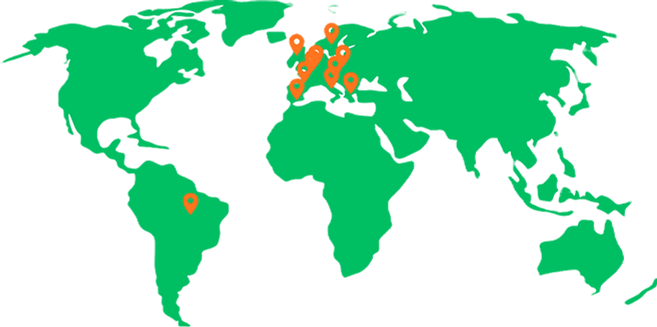
Our network brings together 22 participants from 11 countries and 15 institutions, including a diverse mix of PhD candidates and post-doctoral researchers. All members are actively involved in advancing research on sustainable pavement technologies
Where We Are
Institution - Country
TU Wien - Austria
University of Antwerp - Belgium
Federal University of Recôncavo da Bahia - Brazil
University of São Paulo - Brazil
Eiffage /ENTPE / Université de Lyon - France
University Gustave Eiffel - France
Aristotle University of Thessaloniki - Greece
University of Bologna - Italy
Polytechnic University delle Marche - Italy
Utrecht University - The Netherlands
TU Delft - The Netherlands
Warsaw University of Technology - Poland
University of Granada - Spain
KTH Royal Institute of Technology - Sweden
Nottingham University - UK
Who We Are

Christina Makoundou
University of Antwerp, Belgium


Lignin, waste cooking oil, crops
YMC Leader


"Biobased resources transform pavements improving both durability and environmental impact"


MSCA Postoctoral Fellow

Ariane Lúcia Oss-Emer
University of Granada, Spain
Biobinder produced from by-products of the paper industry and modified with SBS polymers.
YMC Social Media
"Promote sustainability and a circular economy in pavement construction by using renewable biobinders and combining them with reclaimed asphalt (RA) to reduce reliance on fossil-based materials, enhance asphalt mixture performance, and lower greenhouse gas emissions"
Phd Student

Aleksandra Neimark
KTH Royal Institute of Technology, Sweden
My research focuses on lignin and lignin-modified bitumen for sustainable asphalt, specifically investigating its behaviour at the binder and mastic scales. I am also exploring the use of crude tall oil and tall oil pitch as potential additives to create synergistic effects with lignin in binder applications.
YMC
"Bio-based materials like lignin present a significant opportunity to enhance sustainability in infrastructure. Their potential lies in reducing our dependence on fossil-based binders, lowering the carbon footprint of pavements, and valorising industrial by-products. Technically, they can improve key performance properties, including high-temperature stability, ageing resistance, and moisture resilience.
Realising this potential, however, requires navigating specific technical challenges. A primary consideration is managing performance trade-offs, where enhancing stiffness for rutting resistance can compromise low-temperature flexibility, increasing cracking susceptibility. Further barriers to scalability include material compatibility issues, a scarcity of long-term performance data, and uncertainties in supply chain logistics.
The path forward lies in targeted research to address these barriers. This necessitates fundamental studies into material interactions, multi-scale testing protocols, and validation of long-term durability. The objective is to systematically advance these materials from the research stage to practical, durable, and eco-friendly infrastructure solutions."
Phd Student

Andressa Chaves
Eiffage and ENTPE, France
Biobinder derived from paper industry by-products.
YMC
"Bio-based materials are promising alternatives for building more sustainable roads. Bio-based binders drive innovation, promote the circular economy, and add value to natural by-products, contributing to more environmentally friendly infrastructure."
Phd Student


Christian Gerald Daniel
Utrecht University, the Netherlands
Oilseed-based oils, pine tree and other forest residues, natural rubber
YMC
"I see bio-based materials as an important part of a more sustainable construction sector, but their use should be guided by a thorough consideration of their technical performance alongside environmental, economic, and social impacts."
Junior Assistant Professor and PhD Researcher

Danai Kalama
University of Antwerp, Belgium
Lignin and Waste Cooking Oil
YMC
"Understanding the fundamentals of bio-binders (rheology, adhesion, ageing)."
Phd Student
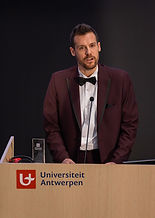
Georgios Pipintakos
University of Antwerp, Belgium
Lignin, Waste Cooking Oil, Biogenic binders, Bio-oils
YMC
"The primary goal of my ongoing and future projects is to exhaust the limits of incorporating fossil fuel-free binders in asphalt construction, ideally in combination with reclaimed asphalt pavement (RAP)"
Postdoctoral fellow


Justine Cantot
Laboratoire Matériaux pour Infrastructures de Transport - Université Gustave Eiffel, Campus de Nantes, France
Waste Cooking Oil, Lignin, Natural Rubber
YMC
"Bio-based materials reduce dependence on non-renewable resources while raising new questions for research: a different chemistry, different properties, different methods."
Phd Researcher

Kussai Waleed Alrini
University of Bologna, Italy
Wholly Bio-based materials, >75% replacement, sources such as sludge and algae.
YMC
"Bio-based materials represent a promising pathway to reduce the environmental impact of construction and paving industries by lowering carbon emissions and reliance on fossil resources. Their opportunities lie in circular economy integration, improved recyclability, and alignment with sustainability goals. However, challenges remain in achieving consistent mechanical performance, long-term durability, and scalability for industrial application."
Phd Student

Leidy Espinosa Ruiz
Polytechnical School of the University of Sao Paulo, Brazil
By-products of sugarcane processing, bacterial biopolymers, pine resin processing.
YMC
"Bio-based materials for paving applications are redefining how we think about pavements and sustainability. While challenges remain, including variability, scalability, and limited data on durability and recyclability, even small doses of bio-based alternatives may help reduce our environmental footprint"
Postdoctoral fellow

Lili Ma
Delft University of Technology, the Netherlands
Currently working on biomaterials generated from organic waste
YMC
"The emerging bio-based materials offer a great opportunity to increase the sustainability and circularity of asphalt pavements.
The diversity of bio-based materials makes it promising to develop bio-based binders adaptable to various climate change-cased challenges.
A comprehensive and adaptable standards should be defined for bio-based materials to ensure proper service performance."
Postdoctoral fellow

Lorenzo Paolo Ingrassia
Università Politecnica delle Marche, Ancona, Italy
wood-based bio-oils (e.g., tall oil pitch), lignin
YMC
"In light of the bitumen shortage expected in the coming decades, bio-based materials can potentially represent the future of pavements, if appropriately engineered. However, to build trust in these materials, private stakeholders (such as petrochemical companies) should share more information about the products they are developing with both the public and the scientific community."
Postdoctoral fellow

Maria Camila Santos Quiñones
Université Gustave Eiffel, France
Oil-rosin bio-based binders.
YMC
"My work is driven by the belief that biomaterials can play a transformative role in developing more sustainable and circular road construction practices, particularly when combined with RAP. Although challenges remain—such as cost, resource availability, limited long-term performance data, and the current reliance on testing protocols designed for fossil-based bitumen—I believe these barriers can be reduced as environmental impact and life-cycle considerations gain prominence. Progress in this field requires adapting and developing new testing methods, implementing trial sections to assess real-world behavior, refining construction practices, and ensuring recyclability. In this context, my current research aims to deepen the understanding of ageing mechanisms in bio-based binders, which is essential for improving durability, optimizing formulations, and supporting the development of appropriate standards."
Phd Student


Pedrina Vitória Assis Correia
Polytechnical School of the University of São Paulo, Brazil
Biochar
YMC
"The future of pavement engineering will be built on biomaterials. In this way, highways will be able to achieve a cradle-to-cradle life cycle."
Phd Student

Shisong Ren
University of Antwerp, Belgium
Bio-rejuvenation and bio-composition for bituminous materials using bio-oil and biochar derived from HTL process of biomass.
YMC
"With some challenges (less understanding and experience), bio-based materials have great potential used in bitumious materials to achieve the bio-rejuvenation and performance improvement through bio-composite structure. The limitations will be the less understanding on biomaterials interaction with bituminous materials, and the difficulty to control the biomass source and thermal processing effect."
Postdoctoral fellow

Stavros Kalampokis
Aristotle University of Thessaloniki, Greece
lignin; algae; microalgae; biochar; rice husk; spent coffee grounds; corn oil; sunflower seed oil
YMC
"His vision for biomaterials is to see them become central to building a more sustainable and resilient infrastructure future. By harnessing renewable, locally available and eco-friendly resources as bio-modifiers for conventional bitumen, he aims to reduce dependence on petroleum-based products while enhancing pavement performance and durability. He views biomaterials not only as an opportunity to lower the environmental footprint of construction but also as a way to bridge innovation with circular economy principles, transforming waste and natural resources into high-value engineering solutions."
Phd Student

Stefan Werkovits
University of Nottingham, United Kingdom
Lignin and lignin-based products
YMC
"To transform the use of lignin in sustainable bitumen applications, enabling durable, compatible, and high-performance bio-based materials that advance resilient infrastructure and support a circular economy."
Postdoctoral fellow